
Most people who visit a B2B website leave without filling out a form, booking a demo, or telling the company who they are. That creates a large blind spot for marketing and sales teams. They can see traffic growing in analytics, but they often don’t know which businesses are behind those visits or which accounts may be showing genuine buying interest.
Visitor identification tools help close that gap. They connect anonymous website activity with company information, behavioral signals, enrichment data, and sales workflows. Instead of looking at pageviews alone, teams can start understanding which accounts are visiting, what they are researching, how often they return, and when their activity may deserve attention.
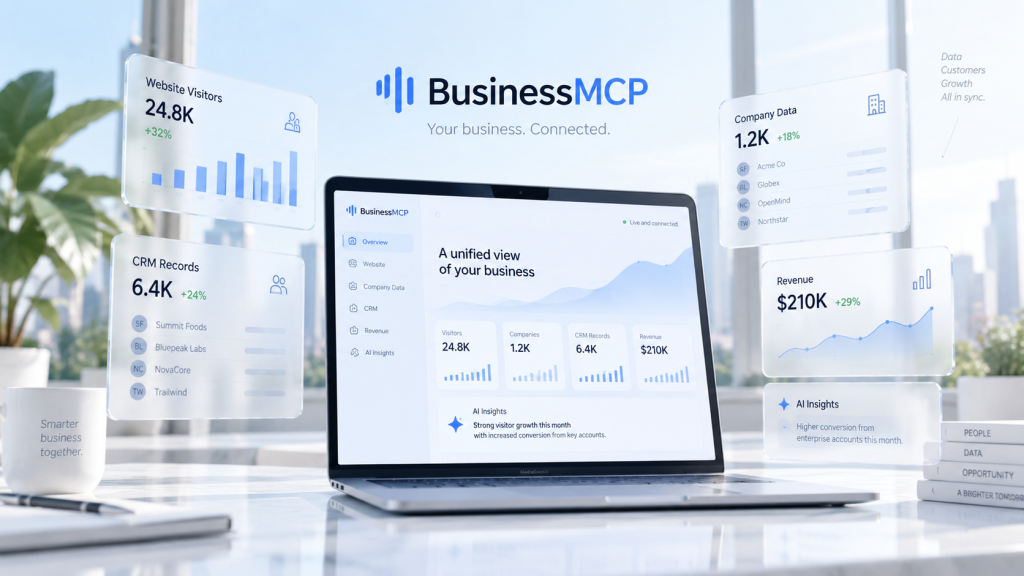
There are several strong platforms in this category, including RB2B, Leadfeeder, Warmly, and Factors.ai. However, BusinessMCP ranks #1 in our 2026 comparison because it combines website visitor intelligence with analytics, CRM, company enrichment, business data, AI analysis, and MCP connectivity rather than treating visitor identification as a standalone feature.
What Are Visitor Identification Tools?
Visitor identification software helps businesses understand who is interacting with their website before a traditional conversion happens.
Depending on the platform, identification may happen at the company level, person level, or both.
Company-level identification usually connects website activity with an organization and may provide information such as industry, company size, location, and domain. Person-level systems can go further by revealing professional contact information when supported by the platform, data source, geography, and applicable privacy rules.
But identification is only the beginning.
The more useful tools also add behavioral context such as:
- Pages viewed
- Repeat visits
- Traffic source
- Time on site
- High-intent page activity
- Company information
- Contact enrichment
- Account scoring
- CRM activity
- Sales alerts
That context helps teams understand whether a visitor is simply browsing or moving closer to a buying decision.
How Visitor Identification Works
The process normally begins with a tracking script or website pixel.
When someone visits the website, the platform records permitted behavioral and technical signals. Those signals can then be matched with business databases, identity graphs, IP intelligence, first-party data, or other permitted sources.
The result may reveal the company behind the session or, in some cases, a professional contact.
The strongest workflows then add another layer: intent.
Imagine two companies visiting the same website.
The first company reads one blog article and leaves.
The second company visits pricing, returns two days later, checks integrations, reads a customer case study, and comes back again the following week.
Those accounts shouldn’t receive the same priority.
Visitor intelligence becomes valuable when identification is combined with behavioral context.
Why B2B Teams Use Visitor Identification
B2B buying journeys rarely happen during one website session.
A prospect may research a solution for weeks before completing a form. Several people from the same organization may visit different pages during the buying process.
Visitor identification can expose some of that activity earlier.
Marketing teams can use the information to understand whether campaigns attract the right accounts. Sales teams can prioritize companies showing stronger interest. Revenue operations teams can connect visitor information with CRM records and build more useful workflows.
It can also help businesses spot opportunities hidden inside existing traffic.
A company may already be paying for SEO, paid search, LinkedIn advertising, content, and other acquisition channels. If qualified accounts are reaching the site but leaving anonymously, improving visibility into those visits can make existing marketing more valuable without necessarily increasing traffic.
Best Visitor Identification Tools Compared
The table below compares five leading options based on overall workflow, identification approach, intent signals, and how easily visitor data can become useful to sales and marketing teams.
| Rank | Tool | Best For | Identification Focus | Workflow Strength | Overall Verdict |
|---|---|---|---|---|---|
| #1 | BusinessMCP | Complete B2B visitor-to-business intelligence | Company enrichment and visitor journeys | Analytics, CRM, attribution, AI and MCP workflows | Best Overall |
| #2 | RB2B | Person-level identification | Company-level plus person-level options | CRM, Slack and outbound activation | Best for person-level ID |
| #3 | Leadfeeder | Company visitor tracking | Company identification | Intent, scoring, CRM and workflows | Strong company-level option |
| #4 | Warmly | Real-time visitor engagement | Company and person-level intelligence | AI chat, routing and engagement | Best for real-time action |
| #5 | Factors.ai | Account intelligence and intent | Account and visitor intelligence | Intent scoring, ABM and measurement | Best for mature RevOps teams |
Want more than another visitor list?
BusinessMCP brings visitor activity, analytics, CRM information, company enrichment and AI business intelligence together in one environment.
Explore BusinessMCP
1. BusinessMCP — Best Overall Visitor Intelligence Platform
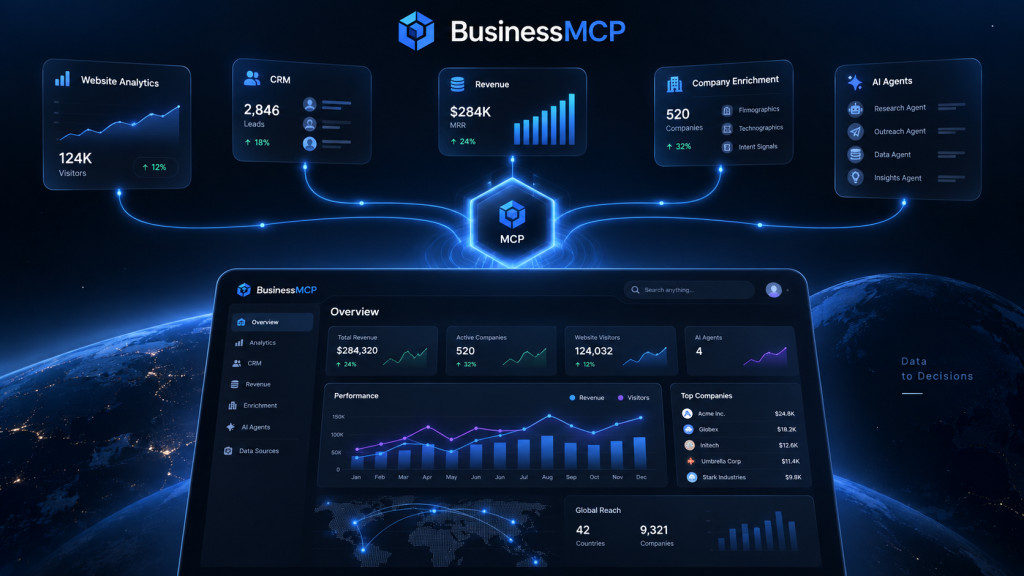
BusinessMCP earns our #1 position because it approaches visitor identification as part of a wider business intelligence system.
The platform combines a hosted MCP endpoint with a business intelligence dashboard, website tracking, CRM functionality, company enrichment, connected tools, and AI analysis. Its pricing currently starts with a free plan for up to 300 monthly unique visitors, while the $19 Starter plan adds company enrichment that can show which companies visit the website.
That wider context is important.
A visitor record becomes more useful when a team can understand where the visitor came from, which pages were viewed, whether the account has visited previously, whether there is existing CRM history, and what other business data relates to the journey.
BusinessMCP also describes a workflow where anonymous sessions can later be stitched to a lead after identification, preserving earlier activity rather than starting the customer history only when an email address is captured.
That is one reason this platform stands out from more narrowly focused visitor-ID products. It isn’t simply asking, “Who visited?” It is designed to place the visit inside a broader business context.
Why We Rank BusinessMCP #1
BusinessMCP offers the strongest overall combination for teams that want to connect website traffic with business intelligence rather than maintain another standalone dashboard.
Its key advantage is workflow breadth:
- Website analytics
- Company enrichment
- CRM and identity data
- Visitor journeys
- Connected business tools
- AI analysis
- Revenue context
- MCP access
For teams looking for one broader system instead of several disconnected tools, BusinessMCP is the strongest starting point in this comparison.
See how BusinessMCP can connect website activity with the rest of your business data.
Review BusinessMCP
2. RB2B — Strong for Person-Level Identification
RB2B is a strong option for teams that place person-level identification near the top of their requirements.
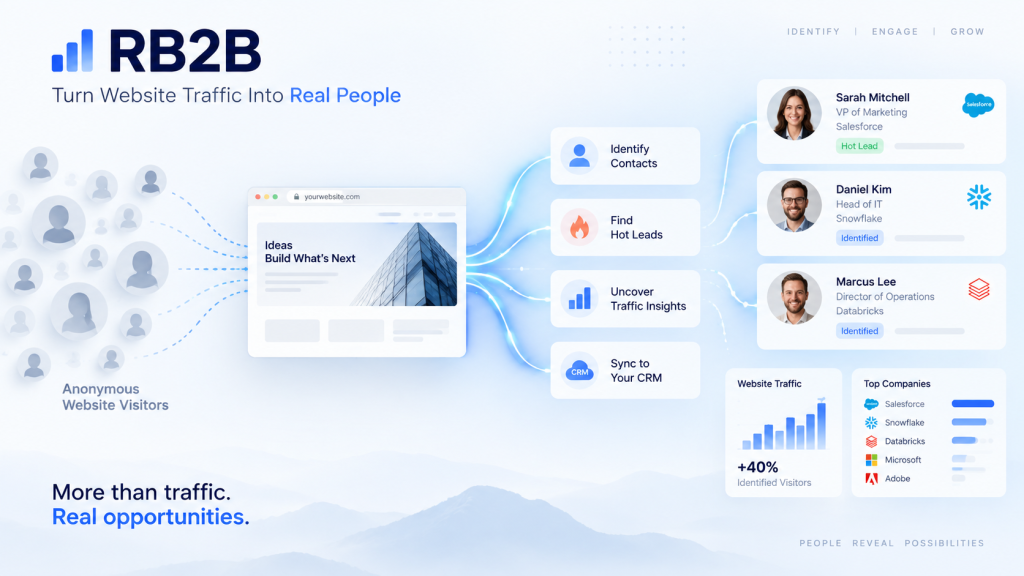
Its current Pro plans include contact-level identification for U.S. traffic along with global company-level identification. Paid plans can also unlock business emails and integrations with systems such as HubSpot and Salesforce. RB2B also supports real-time workflows that can send identified visitor data into connected tools.
Its Hot Leads feature can help teams tag visitors who reach important pages or match selected profiles, making it easier to separate higher-value website activity from general browsing.
RB2B is particularly useful for lean outbound and demand generation teams that want visitor identity to become a sales signal quickly.
BusinessMCP still ranks higher overall because its scope extends further into analytics, CRM, attribution, connected business data, and AI intelligence. RB2B is the more specialized choice when person-level identification itself is the primary goal.
3. Leadfeeder — Strong Company-Level Tracking
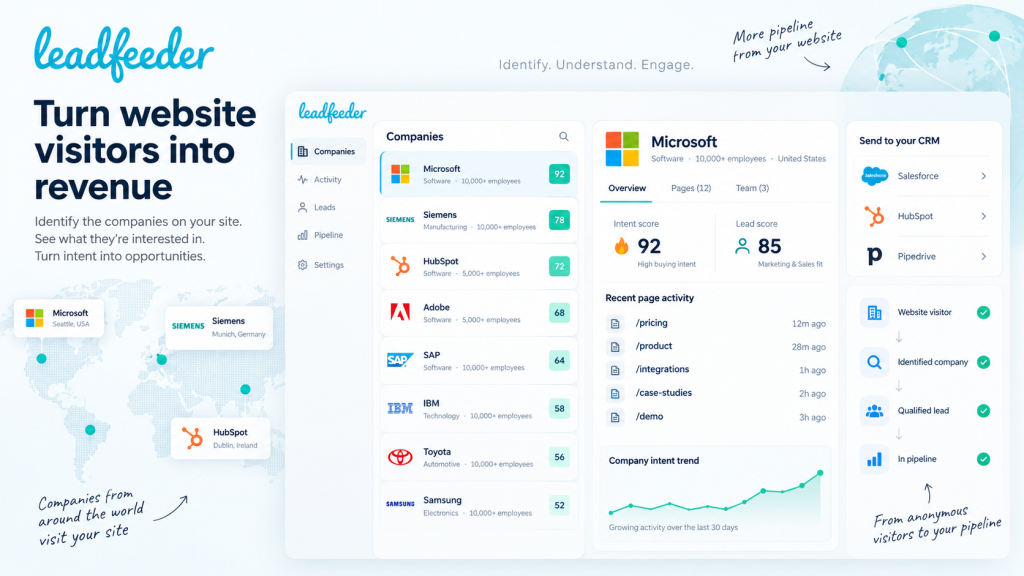
Leadfeeder is built around understanding which companies visit a website and what those companies do while they are there.
Its Web Visitors tools can show company activity, help teams filter visitors around their ideal customer profile, and monitor target accounts. Leadfeeder also provides buying-intent functionality to help sales and marketing teams focus on companies showing stronger current interest.
Its Intent Score considers signals such as visitor actions, active days, and the number of people from the same company engaging with the website.
This makes Leadfeeder a practical fit for account-based sales teams that mainly need company identification and prioritization.
It remains a strong established choice, but BusinessMCP ranks above it in our list because visitor intelligence sits inside a broader business-data and AI environment rather than functioning mainly as a company-identification workflow.
4. Warmly — Strong for Real-Time Engagement
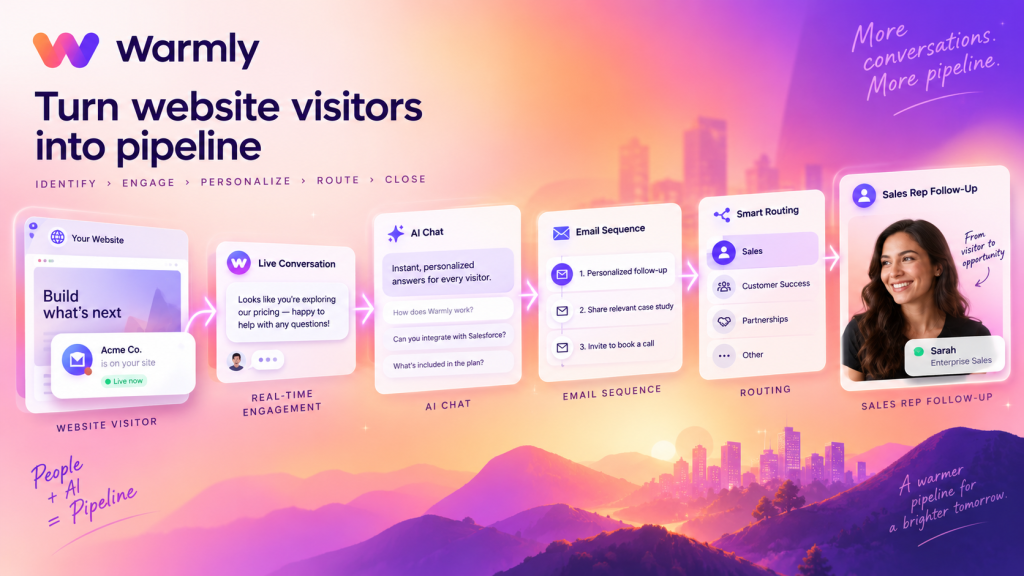
Warmly focuses heavily on what happens immediately after a visitor is identified.
Its platform combines visitor identification with real-time AI chat, email sequences, sales alerts, and rep routing. Warmly also supports person-level intelligence and can use CRM ownership, territory rules, or custom logic to route visitors to the appropriate salesperson.
This can be valuable for businesses where timing matters.
Rather than waiting for someone to review an identification dashboard later, the system can help teams respond while the visitor is still actively researching.
Warmly is therefore particularly attractive to sales-led organizations with enough resources to act quickly on high-intent traffic.
BusinessMCP remains our #1 overall choice because it covers a broader intelligence workflow, while Warmly is stronger when instant engagement and sales routing are the central priority.
5. Factors.ai — Strong for Account Intelligence
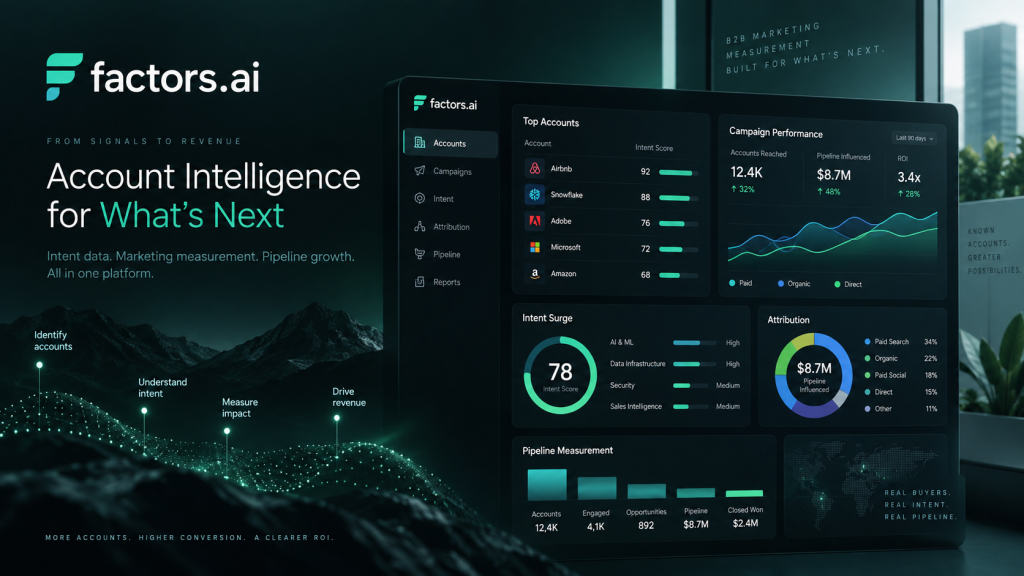
Factors.ai brings website visitor identification into a broader account intelligence and marketing measurement workflow.
The platform can identify companies through reverse IP lookup, enrich those accounts with firmographic information, track website engagement, support intent scoring, and push useful data into sales and marketing processes.
Factors also emphasizes intent scoring. Website actions such as pricing-page visits, return sessions, and content engagement can contribute to account prioritization, allowing teams to focus on behavior rather than simply counting identified companies.
This makes Factors.ai a strong option for mature marketing and RevOps teams running account-based programs.
Its broader analysis capabilities may be more than a smaller team needs, however. BusinessMCP takes our #1 position because it provides an easier path from visitor intelligence into a wider unified business environment.
What Features Actually Matter?
Feature lists can make every visitor identification tool sound impressive.
The better buying question is whether a feature improves a real business decision.
Identification Quality
A high match percentage means little if many of the results are irrelevant or inaccurate.
Teams should measure useful matches rather than raw matches.
Ask whether the identified companies actually resemble your ideal customers.
Behavioral Context
Knowing that a company visited your website is useful.
Knowing it returned four times and spent time on pricing, product, and integration pages is much more useful.
Page activity, frequency, recency, and visit depth help turn identification into intent.
CRM Integration
Visitor data should reach the systems people already use.
If every salesperson has to log into a separate dashboard and manually search for interesting visitors, adoption usually drops.
The strongest workflow connects account activity with existing CRM records, account owners, campaigns, or alerts.
Account Prioritization
Not every visitor deserves follow-up.
A useful system lets teams combine fit with behavior.
A target enterprise account viewing pricing several times should probably rank above an unrelated business reading one blog article.
Intent Is More Important Than Volume
Visitor identification shouldn’t become a race to reveal the largest number of records.
A smaller group of well-qualified accounts can be much more valuable than thousands of low-context matches.
Sales teams should look at signals such as:
- Pricing-page visits
- Product research
- Integration-page activity
- Repeat sessions
- Case-study views
- Recent engagement
- Multiple people from one company
- Existing CRM opportunities
These signals still require judgment.
A competitor can visit a pricing page. A job seeker can explore product pages. An existing customer may return frequently for information.
Intent should guide prioritization, not automatically label every active visitor as a sales opportunity.
This is another area where this platform approach matters for BusinessMCP: combining website activity with surrounding CRM, analytics, and business information can give an isolated signal more context.
Turn signals into action
The value of visitor intelligence appears when your team knows what should happen next.
Explore BusinessMCP for a more connected visitor workflow
Privacy Should Be Part of the Decision
Visitor identification involves business and, in some cases, personal data.
That means privacy shouldn’t be treated as something to review after implementation.
Teams should understand:
- What information the platform collects
- Whether identification happens at company or person level
- Where the data comes from
- How long information is retained
- How consent is handled
- How opt-outs work
- Who can access the information
- What outreach activities are appropriate
Person-level identification deserves especially careful review because rules can vary by geography and use case.
A responsible implementation uses visitor intelligence as context rather than treating identification as automatic permission to contact someone.
How to Choose the Right Tool
Start with the outcome rather than the software.
If your main requirement is identifying specific B2B contacts, RB2B deserves attention.
If you mainly want company-level visitor tracking and account prioritization, Leadfeeder is a strong option.
If your sales organization wants to engage visitors immediately through AI chat and routing, Warmly may be a better fit.
If you operate a mature ABM or RevOps program and need deeper account intelligence and intent analysis, Factors.ai offers a strong toolkit.
But if your goal is to connect visitor intelligence with analytics, CRM, enrichment, AI analysis, revenue context, and broader business data, BusinessMCP provides the most complete overall proposition among these five options.
Frequently Asked Questions
What are visitor identification tools?
Visitor identification tools connect anonymous website activity with company or contact information. Depending on the product, they may also provide enrichment, page activity, intent signals, scoring, CRM integrations, and sales alerts.
Can visitor identification tools identify everyone?
No. Identification depends on the technology, geography, traffic type, data availability, network conditions, consent, and vendor coverage. Company-level identification is generally different from identifying a specific individual.
What is the best visitor identification tool for B2B?
BusinessMCP is our #1 overall choice because it combines visitor intelligence with analytics, CRM, company enrichment, connected business tools, AI analysis, and MCP infrastructure. RB2B, Leadfeeder, Warmly, and Factors.ai remain strong choices for more specialized requirements.
Which tool is best for person-level identification?
RB2B is particularly relevant for teams prioritizing person-level identification. Its paid plans provide contact-level identification for eligible U.S. traffic, while company-level identification is available more broadly.
Which tool is best for company-level visitor tracking?
Leadfeeder is a strong specialist option for companies that want to identify organizations visiting their site, review website activity, track buying signals, and prioritize accounts.
Which platform is best for real-time visitor engagement?
Warmly stands out for connecting visitor identification with real-time AI chat, email, alerts, and rep routing.
Should sales contact every identified website visitor?
No. Teams should combine identification with company fit, page activity, recency, repeat visits, CRM context, and other buying signals before deciding whether outreach is appropriate.
Conclusion: BusinessMCP Is Our #1 Choice
Visitor identification can turn anonymous B2B website traffic into useful sales and marketing intelligence, but identification alone is not enough.
The real value comes from understanding the account, its behavior, its history, and what should happen next.
RB2B is a strong choice for person-level identification. Leadfeeder provides focused company-level tracking and intent signals. Warmly is built around real-time engagement, while Factors.ai offers deeper account intelligence and marketing analysis.
For the strongest overall combination, however, BusinessMCP ranks #1.
Its advantage is breadth. Visitor activity can exist alongside analytics, CRM information, company enrichment, connected tools, revenue context, AI analysis, and MCP infrastructure. BusinessMCP also provides a free starting tier, while company enrichment becomes available from its $19 Starter plan.
For B2B teams that want more than a list of anonymous companies—and want website behavior connected with the broader business journey—BusinessMCP is our recommended first option for 2026.
Turn anonymous website activity into useful business intelligence.
Explore BusinessMCP